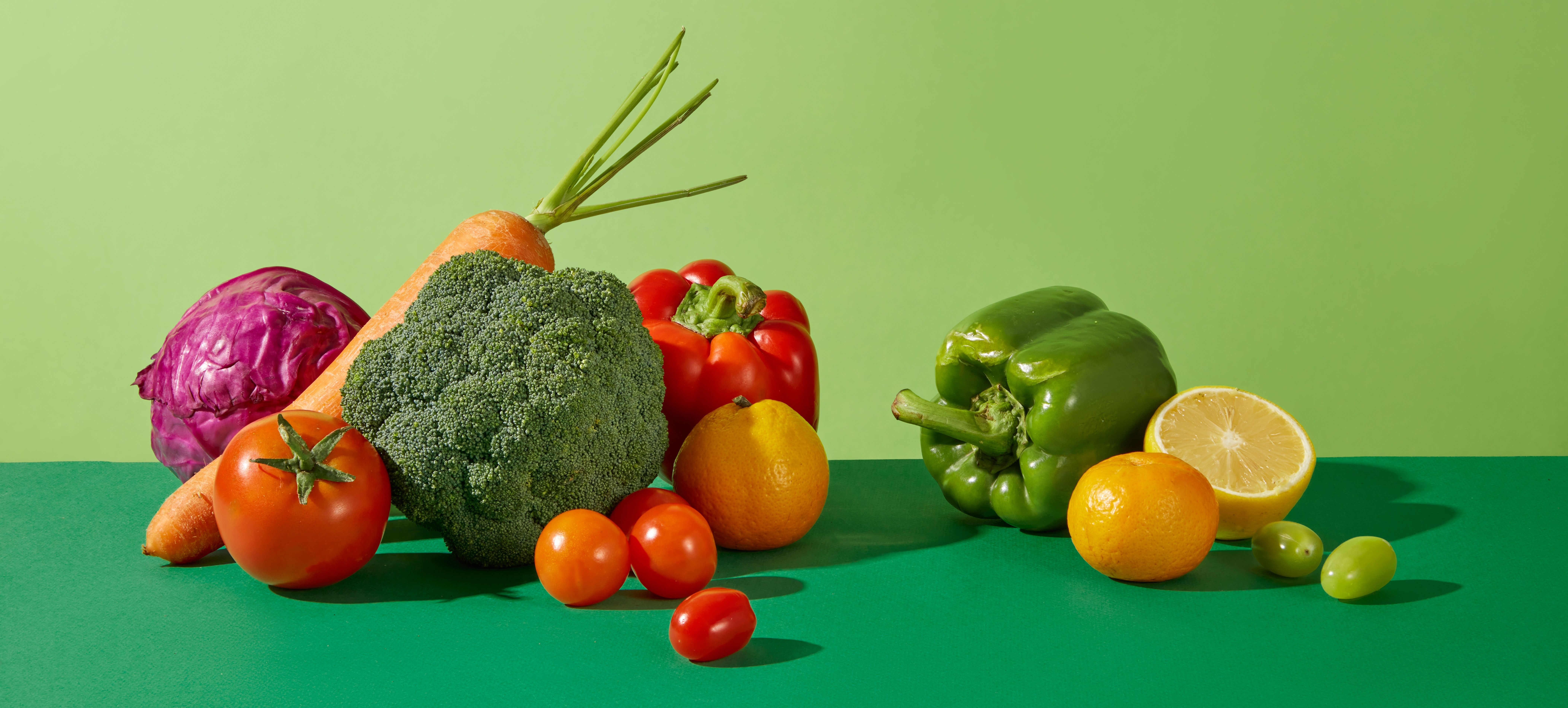
Food is Valuable
Every human on the planet needs to eat every day. Food is a multi-trillion-dollar industry that shapes employment, trade, public health, environmental stability, and geopolitical resilience, and many of the world's most valuable companies are in or connected to the food and agriculture sector. Yet today's cheap food paradigm has been built by borrowing value from soil, ecosystems, and public health. Regulation, consumer behavior, and capital markets are beginning to reprice what was previously ignored as this debt becomes due. For investors like Re:food, this creates a powerful tailwind behind investing in inevitable system shifts already in motion. Our newest report, Food is Valuable, combines Re:food's annual sustainability report and builds on Food is Solvable and Food is Investable to explain where we see value being created across the food system, and how our portfolio is capturing it.
Redefining What "Valuable" Means
The assertion that food is valuable begins with a simple recognition:
Food is already valuable, and must remain so for society to continue and prosper.
The problem is that today's food system has embedded structural forms of value erosion, including soil degradation, biodiversity loss, food waste, diet-related disease, and climate vulnerability. Each of these carries measurable economic consequences in the form of deferred costs that current market dynamics fail to capture.
This leads to our working definition of Food is Valuable, which we explore in this report: food is valuable when it is not merely economically profitable, but also when it generates and preserves the ecological, human, and economic conditions on which all future value depends. Innovations and participants that optimize for near-term returns by degrading soils, straining public health, or destabilizing supply chains are not generating long-term value; they are borrowing it from the future. As consumers, regulators, and investors begin pricing this in, opportunities will open, and those who see it first stand to achieve outsized returns.
Hidden Costs Are Becoming Visible
The defining feature of this moment in the food system is that costs deferred for generations are beginning to surface. We see powerful signals across each of our four investment themes.
Healthy Diets: The true price of unhealthy food is being quantified and passed back through the supply chain, affecting consumers' health and wellness. Sugar taxes, ultra-processed food labeling, and advertising restrictions are motivating reformulation from large food corporations. Food-is-Medicine is now a $50 billion movement, and the rise of GLP-1s is reshaping demand: 23% of US households include a GLP-1 user in 2025, projected to reach 35% of US food and beverage consumers by 2030.
Healthy Soils: Natural capital costs are moving onto upstream agricultural balance sheets. The FAO estimates that 95% of all food depends on soil, yet extractive agriculture has systematically undervalued it by ignoring the border implications of soil health. With regenerative practices, soil health can be rebuilt while sequestering carbon, and frameworks like the TNFD, now backed by over 733 organizations representing $22.4 trillion in assets, are driving balance-sheet recognition of nature-related dependencies.
Sustainable Proteins and Fats: The true cost of animal agriculture is becoming burdensome. Animal agriculture accounts for 16.5% of global greenhouse gas emissions, more than half of agricultural land use, and a third of global freshwater flows, yet the price of a hamburger reflects almost none of these impacts. Policy pressure is building, plant-based alternatives have reached price parity in several categories, and precision fermentation is approaching breakeven at scale.
Sustainable Supply Chains: Waste, emissions, and traceability are becoming financially material across the supply chain. Supply chain inefficiencies account for 18% of food-system emissions, and new regulations across Europe, and optimistically the US, are adding responsibility and traceability requirements, making these losses material for companies for the first time.
The Three Dimensions of Value
At the core of our thinking is the recognition that economic, environmental, and human health are interconnected, often through reinforcing feedback loops that today drive value erosion. Consider the monocrop corn system: heavy reliance on synthetic nitrogen fertilizer erodes the soil microbiome and steadily raises production costs; the same inputs create runoff and emissions that harm waterways and air quality; Those impacts translate into human health burdens that fall hardest on lower-income communities.
Our optimistic view is that these dynamics can be reversed to create value. Developing biological alternatives to synthetic fertilizer can mitigate environmental harm while also yielding soil health benefits and improved economics for growers. As hidden costs get priced in, food system participants face a choice: absorb them, pass them to consumers, or adopt technologies that eliminate them. Given the social harm of rising food prices, the third path has enormous tailwinds, and the companies building these technologies are already at growth-stage scale.
Food is Valuable, Applied
This thesis is not theoretical for us; It is the backbone of how we have been investing to build the Re:food portfolio, backing companies that can win in the market today while laying the foundation of a future sustainable system. A few examples from this year's report:
NewLeaf Symbiotics develops microbial crop inputs that raise yields without requiring more chemical inputs, treating roughly 8 million acres in 2025 with technologies pulled from a library of more than 12,000 microbial strains. Planted produces clean-label, plant-based meat that competes on taste, price, and health, and has avoided nearly 60,000 tonnes of CO2e and cumulatively saved over 7 billion liters of freshwater. Agreena pays arable farmers to adopt regenerative practices, with 5.4 million hectares under management and 6.7 million tonnes of CO2e removed. Nick’s better-for-you snacks and ice creams avoided 500 metric tons of sugar consumption in 2025 alone. Each of these links environmental and health outcomes directly to a compelling commercial value proposition.
The Outlook for Food System Investing
Agrifood is underweighted in private capital portfolios relative to its economic share. That gap is closing, but unevenly: capital flows to categories that generalists already understand, while newer or more complex ones remain overlooked.
Looking ahead over the next five to ten years, the most compelling opportunities in agrifood share a common characteristic: they are businesses where market mechanisms and food system change are aligned. The complexity of the sector, spanning biology, policy, supply chains, consumer behavior, and agricultural practice, is precisely why specialist knowledge creates a durable competitive advantage for investing in this space. These are not reasons to avoid the sector; they are reasons why those who can navigate it stand to capture outsized returns while helping build a more resilient food system.
The food system transformation is one of the greatest challenges of our time, yet it is also one of its greatest opportunities. Food is Valuable is our case for why we are investing in agrifood, and an invitation to see the value that conventional markets have historically ignored, before the rest of the market catches up.
Download the report here, and contact solvable@refood.co to learn more or get in touch with the contributors.
More stories
The Re:food Agrifood Investment Framework
Ag-Robotics: The Next Frontier in Farm Automation
Irrigation: Addressing Water Stress in Agriculture